GESTAL 3G: Feeding System for Gestating Sows in Group Housing
The Original Free Access ESF for Open Pen Gestation
GESTAL 3G accommodates easier sow management, improves animal well-being, and decreases cost (up to 10%) compared to other existing systems (ESF, traditional free-access stalls and shoulder stanchions). There is minimal to no training required and the system can easily be adapted to your existing facility and flooring.
Precision Feeding Expertise Backed by Our Own 2,200-Sow Farm
Our multidisciplinary team supports producers around the world in adopting precision feeding systems for both new builds and retrofits. Because we operate on our own third-generation, 2,200 sow farrow-to-finish farm, we know the challenges you face every day. That's why our solutions are built from real experience: by producers, for producers.
Built to Last in Commercial & Reseach Applications Alike
-
Sows' Self-train
Imitating an individual gestation crate, the GESTAL 3G feeding stations need only a minimal training time.
-
Strong and Durable Product
Engineered for pork producers, by pork producers. Our products are built to be strong and reliable with a focus on simplicity. The crate is heavy built and so simple with only mechanical parts.
-
Pressure Washable
All of our GESTAL products are certified ip66 and Nema 4x (waterproof and dustproof).
How the GESTAL 3G Improves Sow Welfare and Farm Efficiency
Meets animal welfare requirements
Isolating the sow while feeding, the GESTAL 3G station minimizes the risks of aggressions while allowing each sow to eat at her own rhythm while following her nutritional requirements.
With this 360° experience, walk through the gestating room and find out how the GESTAL 3G system feed sows.
Simple Management of Group-Housed Sows
- Easy to install and adapt to any building type or size (new or retrofit).
- Reliable wireless system that can function independently short-term in the event of a computer crash.
- Simpler for sows to adapt to than traditional ESF systems.
Optimize your Sow Data Management
- Easy use of hand held tablets and automated reports to improve in-barn sow monitoring.
- Alerts and automated reports save monitoring time.
Individualize Each Sow’s Diet
- Best price/quality ratio in the industry.
- With the option to use two feed lines, the 3G can blend multiple diets to meet each sow’s specific nutritional needs.
The Perfect Fit to Meet Animal Welfare Requirements
- Decrease competition and aggression over feed access.
- Improve individual sow body condition management.
- Offers pen design flexibility to optimize sow welfare for your specific project.
The GESTAL 3G in Action
Learn how our precision feeders use RFID tags to provide individual diets for sows, optimizing their health and performance throughout pregnancy while reducing feed costs.
Add Feed Blending with the GESTAL 3G Opti
Tailored Nutrient Delivery.
Works in tandem with the 3G stations. Each standalone unit enables precision feed delivery/blending and prevents residual diet contamination while allowing diet changes from remote access location.
- Record and manage complex diet changes.
- Blending combinations of distinct individual diets.
- Capable of continuing to feed animals while replacing computer or communication equipment in the event of a breakdown.
- Notification system to inform customer to out of feed events or problems in the barn.
- Customized diets avoid over-formulation and reduction of excess nutrient excretion.
- Ability to adjust blends/mixtures as often as daily.
- Designed for use in commercial and research applications.
Monitor Your Herd with VISION Software
Know the State of your Herd at a Glance
Access reports, feeding data trends, feeding curves, history, and much more, empowering you to optimize operations with precision and ease.
In-farm and cloud data management available.
Ready to take the next step?
Get a Quote Today
Contact a GESTAL representative
Contact us to learn more about GESTAL feeding systems and their advantages for your herd. Our specialists are available to help you choose the best solution for your farm.
Resources: Group Housing for Gestating Sows
View all-
Group Housing : A Guide to Sustainable Pig Farming
While implementing group housing systems may present challenges with its many different aspects intersecting, when well managed, the benefits to sow welfare and productivity can outweigh the downfalls. Advanced technologies,...
BlogNews Reading time of 14 minutesGroup Housing : A Guide to Sustainable Pig Farming
While implementing group housing systems may present challenges with its many different aspects intersecting, when well managed, the benefits to sow welfare and productivity can outweigh the downfalls. Advanced technologies,...
Read MoreBlog -
Transitioning to Open Pen Gestation with GESTAL 3G
The transitioning process to group housing is a crucial decision in today’s swine production, signifying not only a commitment to animal welfare but also a strategic investment in long-term efficiency.
BlogNewsTransitioning to Open Pen Gestation with GESTAL 3G
The transitioning process to group housing is a crucial decision in today’s swine production, signifying not only a commitment to animal welfare but also a strategic investment in long-term efficiency.
Read full testimonialBlog -
How to Select a Feeding System for Gestating Sows in Group?
Our Animal Welfare Director lists 7 criteria to follow when choosing a feeding system for gestating sows in group.
BlogNewsHow to Select a Feeding System for Gestating Sows in Group?
Our Animal Welfare Director lists 7 criteria to follow when choosing a feeding system for gestating sows in group.
Read MoreBlog
Compatible Products with the GESTAL 3G
-
Equipments
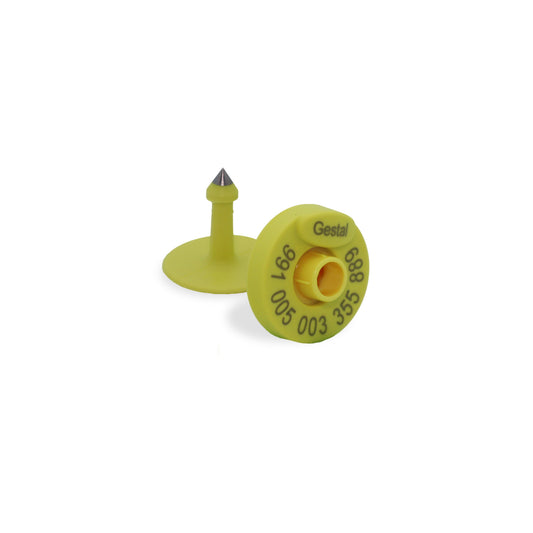
RFID TAG GESTAL (MALE & FEMALE)
PFTAG001Regular price $2.75Regular priceSale price $2.75 -
Equipments
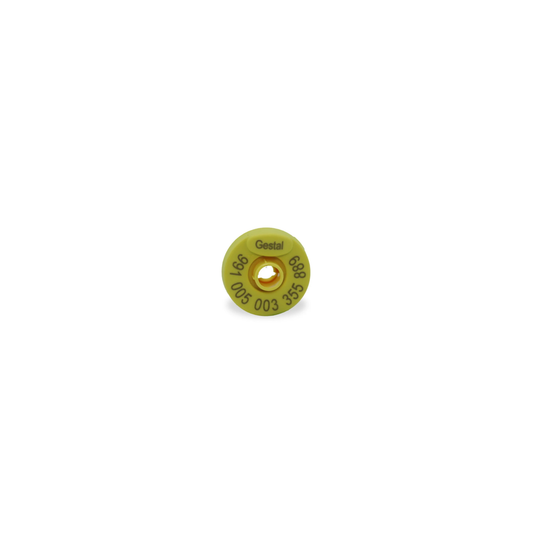
GESTAL RFID TAG (FEMALE PART ONLY)
PFTAG001-2Regular price $1.80Regular priceSale price $1.80 -
-
Most common questions about the GESTAL 3G Feeding System
What is the GESTAL 3G and how does it work?
The GESTAL 3G is a precision electronic sow feeder (ESF) designed for group-housed gestating sows, manufactured by Jyga Technologies. Each station manages up to 18 sows individually. When a sow enters the feeding station, her RFID ear tag is read instantly and she starts to receive meals at a concurrent rate up to her exact pre-programmed daily ration automatically. The station structure mimics a traditional gestation crate, which allows sows to self-train with no employee intervention required.
How does the GESTAL 3G compare to traditional ESF systems?
The GESTAL 3G differs from conventional ESF systems in three measurable ways. First, it requires minimal gilt training: on a typical 5,000 sow farm, traditional ESF systems require 1 to 3 full-time employees solely for gilt training. The GESTAL 3G minimizes this labor draw through its self-training design. Second, it uses a simplified mechanical design with no complex moving parts, reducing breakdown frequency and maintenance time. Third, it reduces feeding costs by up to 10% compared to traditional free-access stalls and shoulder stanchions, with some producers reporting up to 25% savings in individual feeding costs versus conventional ESF. Each smart feeding unit operates as a fully independent, 100% autonomous station, no serial connections mean a single unit failure never disrupts feeding for the rest of the herd.
Can this system be retrofitted into an existing barn?
Yes. The GESTAL 3G installs in both new construction and retrofit barns, adapting to any building type, size, and existing flooring (concrete, slatted, or mixed). Jyga Technologies provides full project management support for barn conversions, including pen layout planning, station-to-sow ratio calculations, and on-site installation guidance.
How does precision feeding work for sows in open pen gestation?
Each sow's feeding program is configured individually in the GESTAL software, VISION, based on her body condition score, parity, and stage of gestation. Her RFID ear tag triggers the release of her exact programmed ration every time she enters the station, automatically deducting any feed already delivered earlier that day. With the optional Opti unit, two separate feed lines are blended in real time to create a customized ration for each animal, eliminating the need to over-formulate a single diet for the entire group. This reduces excess nitrogen and phosphorus excretion, lowering both feed cost and the operation's environmental footprint. Daily feed intake data for every sow is automatically logged and accessible via handheld tablets and automated reports, flagging any animal that misses a feeding.
What happens to feeding if there is a computer failure?
Feeding continues uninterrupted. Each GESTAL 3G station is a fully independent, no station is connected to another in series. A computer crash or network outage does not cascade across the system; every other station keeps feeding normally. Individual units are built to maintain feeding operations independently for a short period without the central computer. This standalone architecture was a deliberate engineering decision by Jyga Technologies to eliminate the single-point-of-failure risk that affects conventional ESF systems wired in series. All units are also certified IP66 and NEMA 4X, protecting electronics against water, dust, and corrosion.
Does group housing with individual feeding meet animal welfare requirements?
Yes. The GESTAL 3G is designed to comply with group housing animal welfare regulations, including the Canadian Code of Practice for the Care and Handling of Pigs (group housing mandate effective 2024) and EU Council Directive 2008/120/EC. By physically enclosing each sow during feeding, the station eliminates competition and aggression at the feed point, the primary welfare risk in group housing environments. Every sow eats at her own pace and receives her individually programmed ration regardless of social hierarchy. Pen design flexibility within the GESTAL 3G system allows producers to further optimize space and sow flow for their specific facility layout.
How many sows does one station manage?
Each GESTAL 3G station manages up to 18 sows. For optimized feeding traffic and minimal wait times, we recommend approximately 15 sows per station in most commercial barn configurations. The correct station-to-sow ratio for a specific operation depends on group size, pen layout, and daily feeding window. Jyga's technical team provides custom barn design support to calculate the optimal number of stations and pen configuration before installation.
Who manufactures the GESTAL 3G and where is it made?
The GESTAL 3G is manufactured by Jyga Technologies, a Canadian company founded in 1994 and recognized as the first company in the world to design and produce electronic feeding systems for pigs. Jyga's owners are active pork producers, operating a 2,200-sow farrow-to-finish farm where all products are tested under real commercial conditions before reaching customers. The company serves producers across North/South America, Europe and Asia, supported by a multilingual technical team providing both remote and on-site installation and service.
What certifications does this feeding system hold?
All GESTAL products, including the GESTAL 3G, carry IP66 and NEMA 4X certifications. IP66 certifies full dust-tight protection and resistance to high-pressure water jets, making the system safe for pressure washing between production groups. NEMA 4X certifies resistance to corrosion and severe weather conditions. Together, these two certifications confirm that the GESTAL 3G electronics and mechanics can withstand the demanding environment of a commercial gestation barn across years of continuous operation.
What sow data does the system collect and how is it used?
The GESTAL 3G automatically records individual feed intake data for every sow at every meal, every day. Additional feeding behavior reports are also generated. This data is accessible in real time via handheld tablets and compiled into automated daily reports through the VISION software. The system flags sows that have not visited their station or have consumed less than their programmed ration, enabling early detection of health issues, estrus, or lameness before clinical signs are visible. Body condition management, ration adjustments, and herd-wide feeding analytics are all managed from the tablet interface without requiring a desktop computer or office workstation.